
11. Antipodean alien in the lawn.
4 November 2025Last Post
21 February 2026
There is a little corner patch of vegetation that catches the afternoon sun where I currently live, and is a convenient spot for outdoor clothes drying when the weather allows. I have used it for years. I inevitably walk around on it, pegging and unpegging clothes, putting down laundry baskets, and generally treat it as ground access to all points on the rotary drier. Nothing unusual.
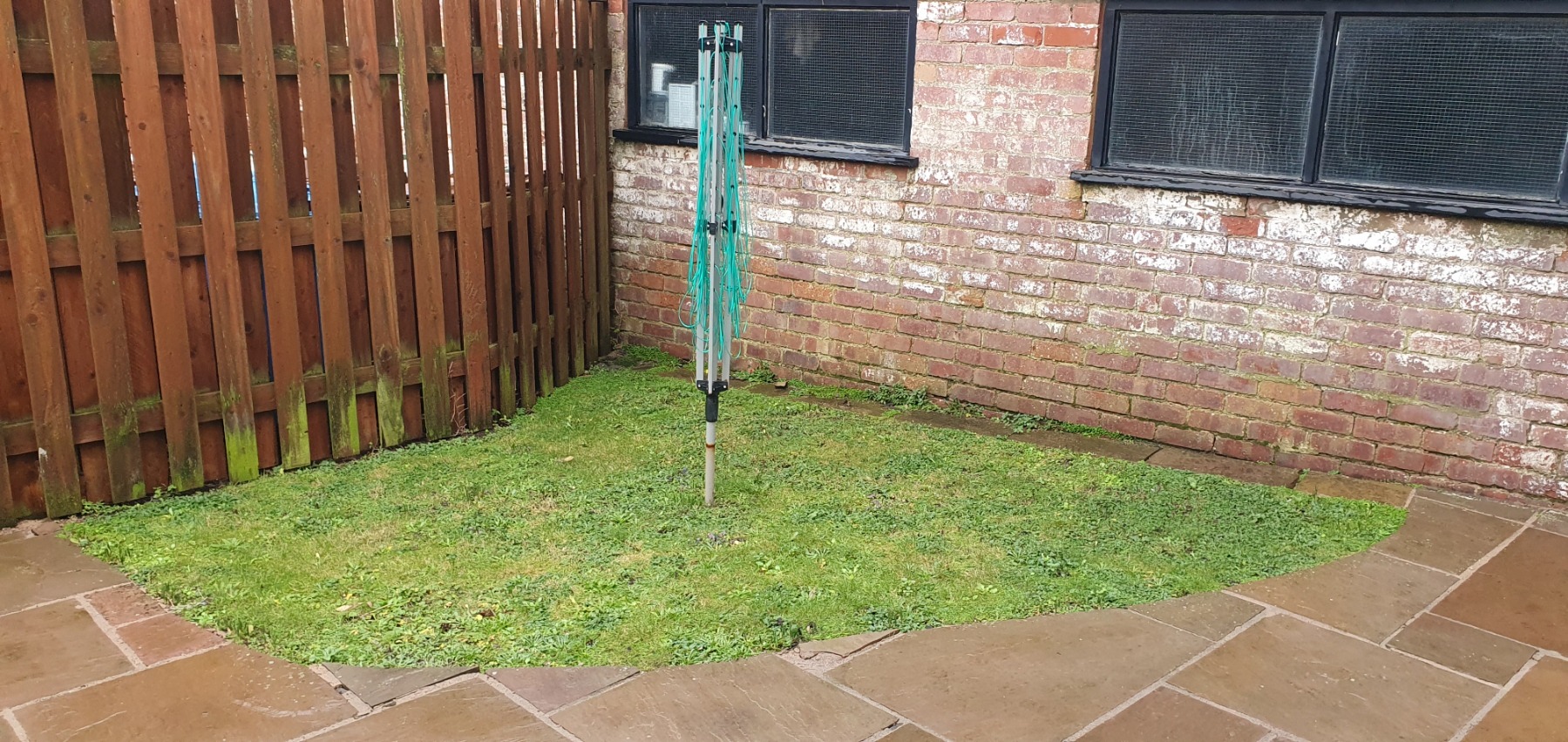
Perhaps it once was a pure grass lawn, but it has never been such in all the time I have been here. Probably because it has only about 5 to 7cm (2-3″) of very silty soil on top of pure seaside sand, so it is very well drained indeed, and grasses just do not seem to do well there. It was always patchy at best.
I rather overlooked it at first, that bit in the corner, but being me, I found I had the occasional leftover seed packet (mostly ornamental daisies), and the remains of mixed spilled seeds at the bottom of my seed collection box, and I needed somewhere to ‘dispose’ of them. I would just empty out whatever I had onto that spot. Somehow, I am reluctant to ‘waste’ seed, even when I am no longer sure of exactly what it is.
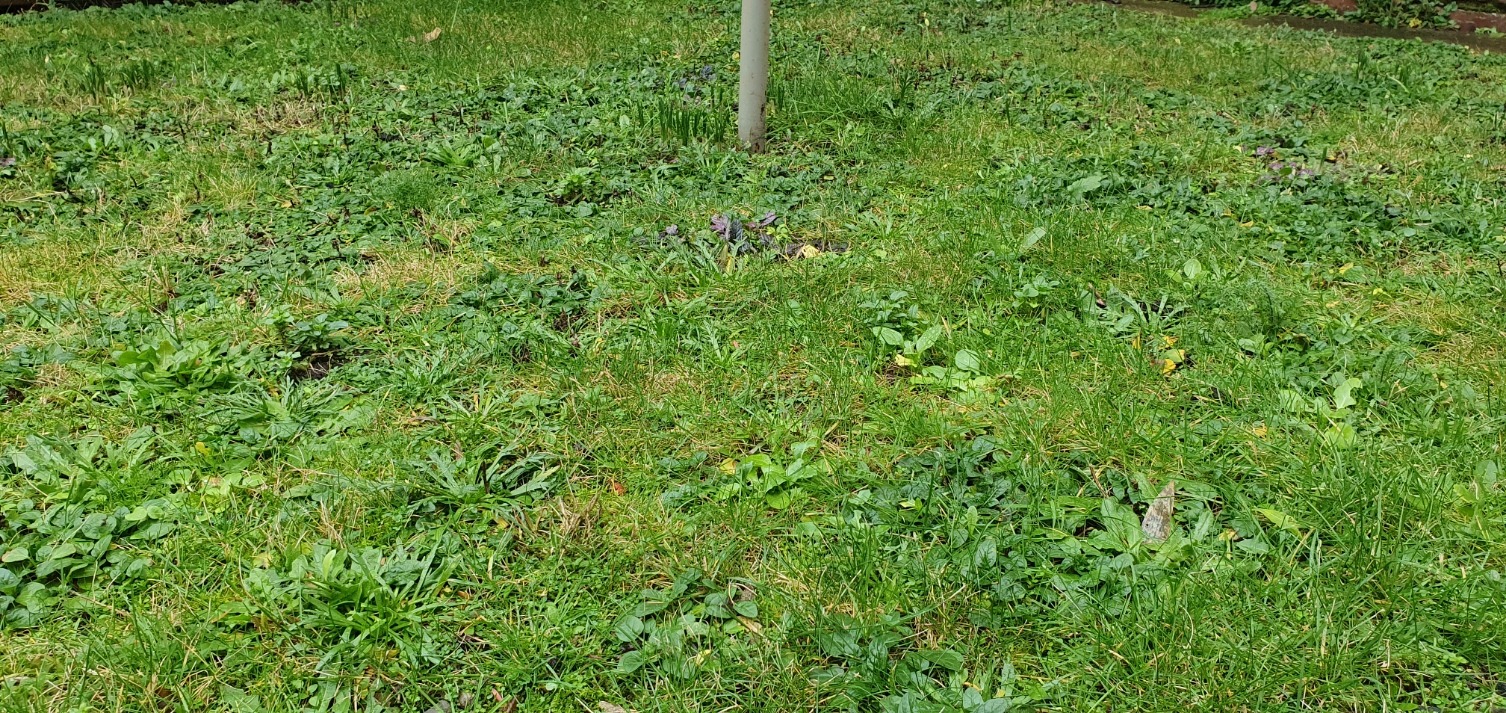
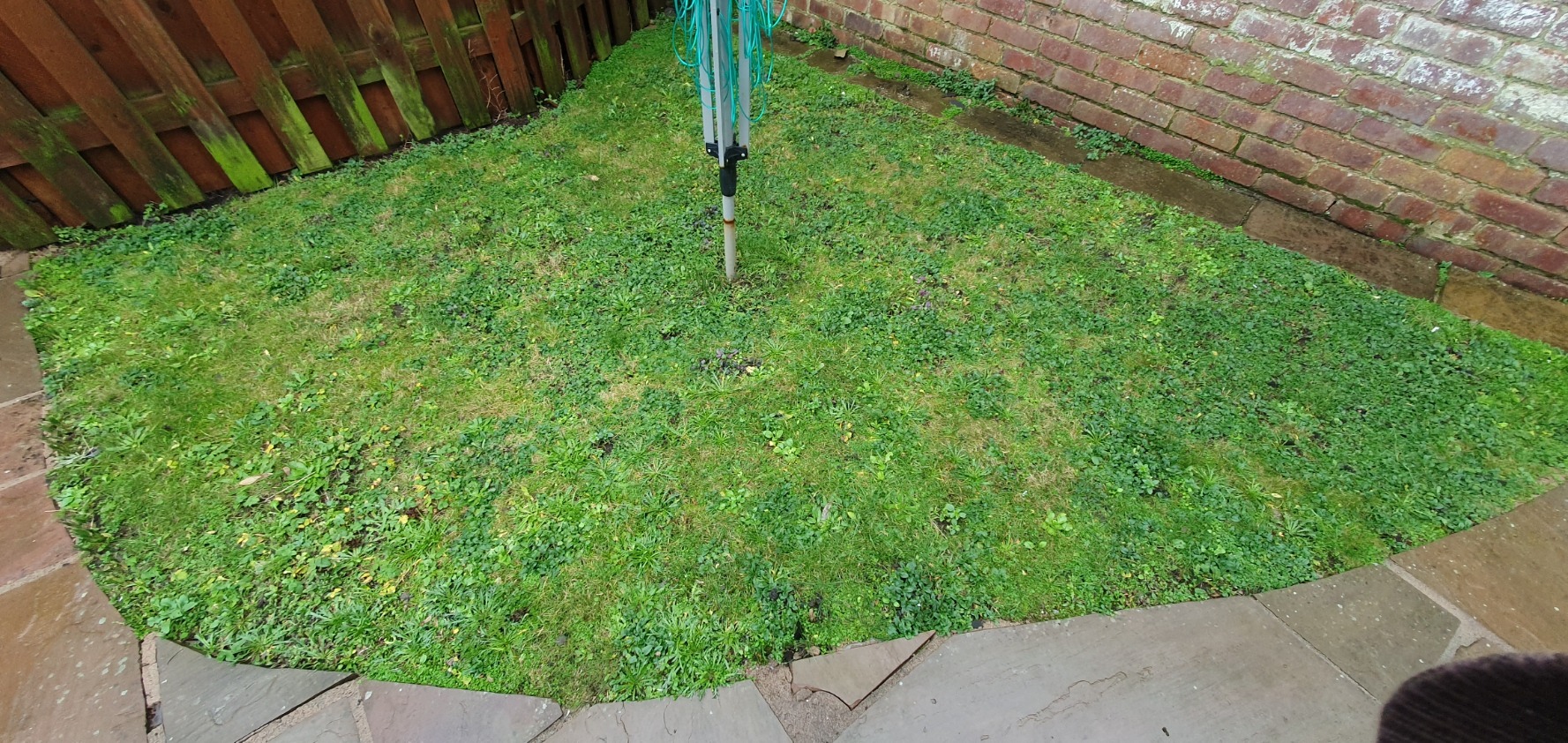
Occasionally I would have an unused or straggly plant from something else I was doing elsewhere with lawns, and rather than dispose of it I would find a bald patch of soil in that corner and put it in, no expectation of survival or special plan. It was that corner spot where the unused and unknown went to survive or disappear. Although, I do confess, I did specifically choose that spot to put in the packet of dehydrated mixed crocus corms I had been given by a well-meaning neighbour. As a horticulturalist, some folk think I can do specialist plant magic and resurrect the almost dead. Amazingly, some corms did actually survive. They even show new shoots in the image (beside the pole) as it was taken this week.
Anyway, this past year I have had a bit more time on my hands than is usual, and locally as I have reported upon already, we were beset by the double whammy of a spring and then a summer drought. With seemingly ever-rising energy costs being what they are, and plenty of warm dry weather, I was doing a lot more outdoor drying, and found I noticed that corner lawn in a way I never had before.
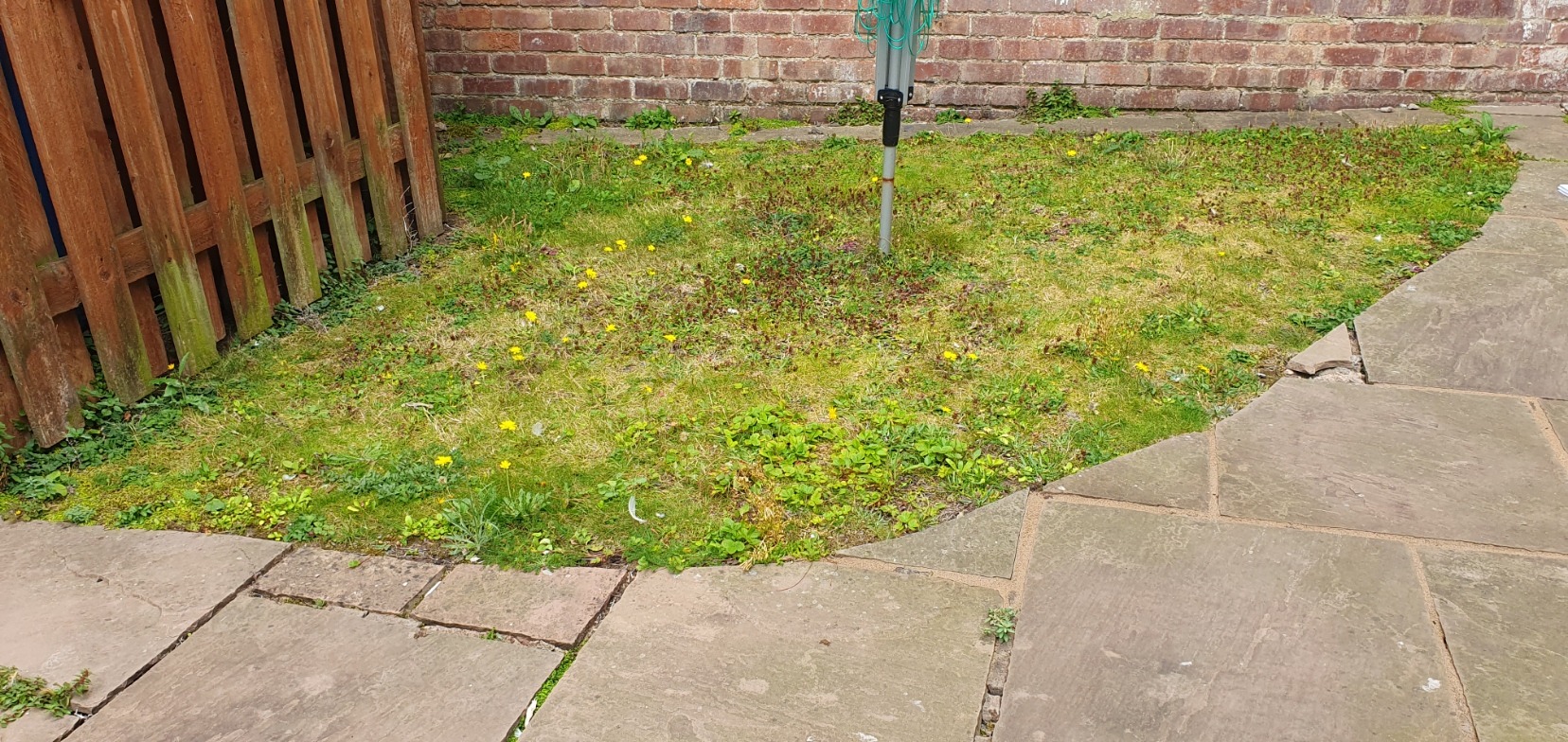
Despite getting plenty of midday and afternoon sun (the hottest time of the day), and receiving no additional water, it remained stunted but generally splashed with green overall.
As you can see for yourself, it was hardy looking lush, or anything close to it, and the grasses were certainly struggling, but it did not entirely turn brown and crispy like all the other grassy lawns hereabouts.
Curiosity piqued, I just had to have a closer look.
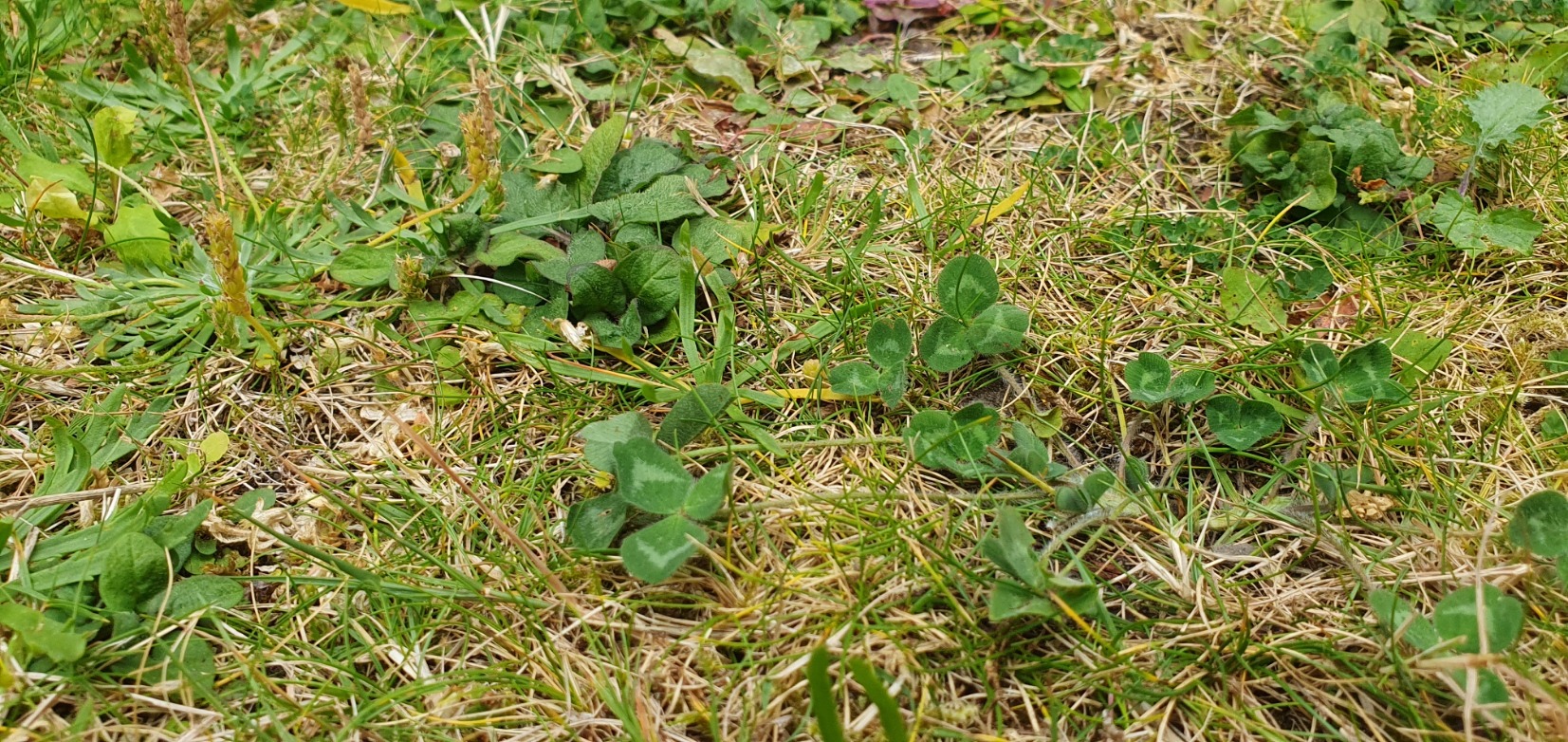
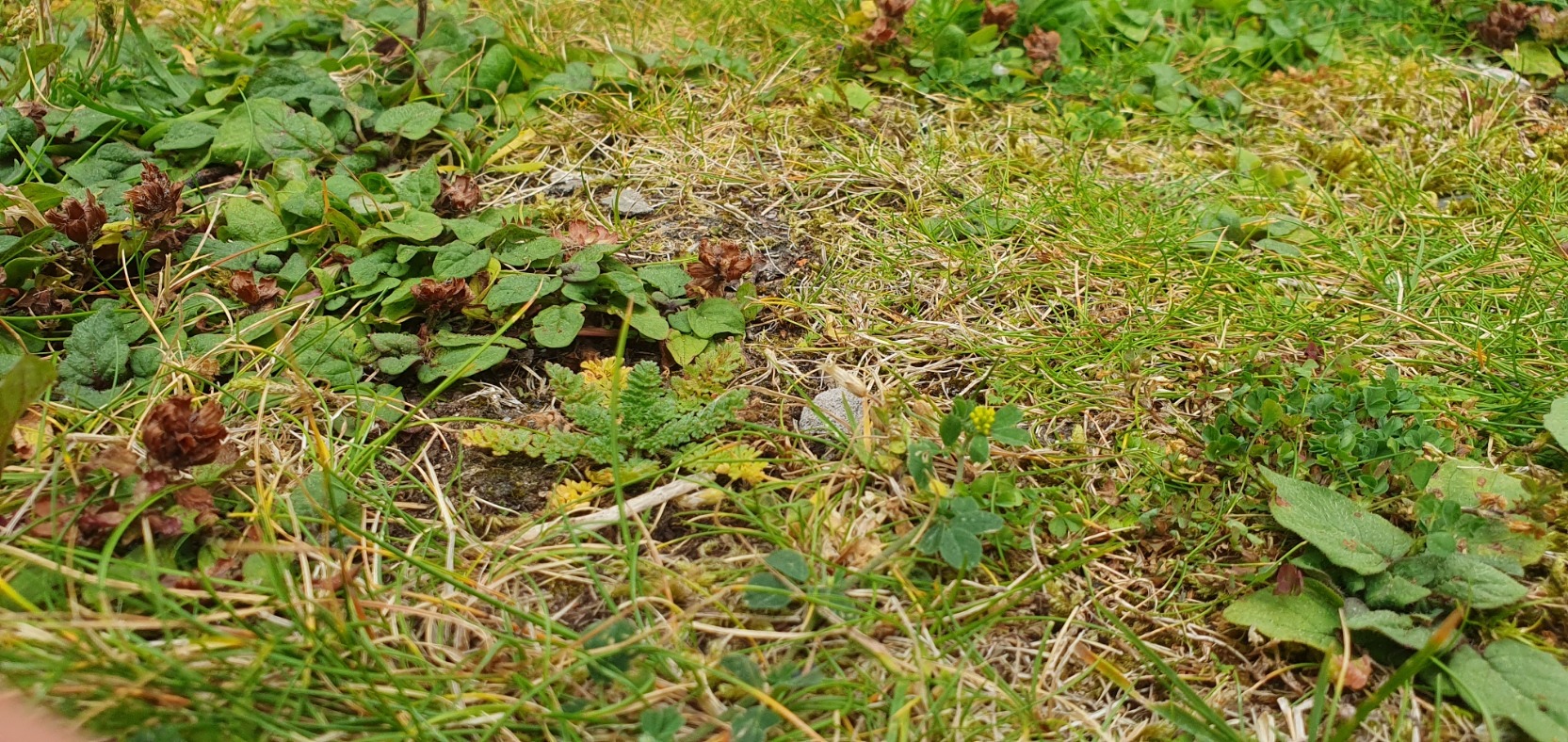
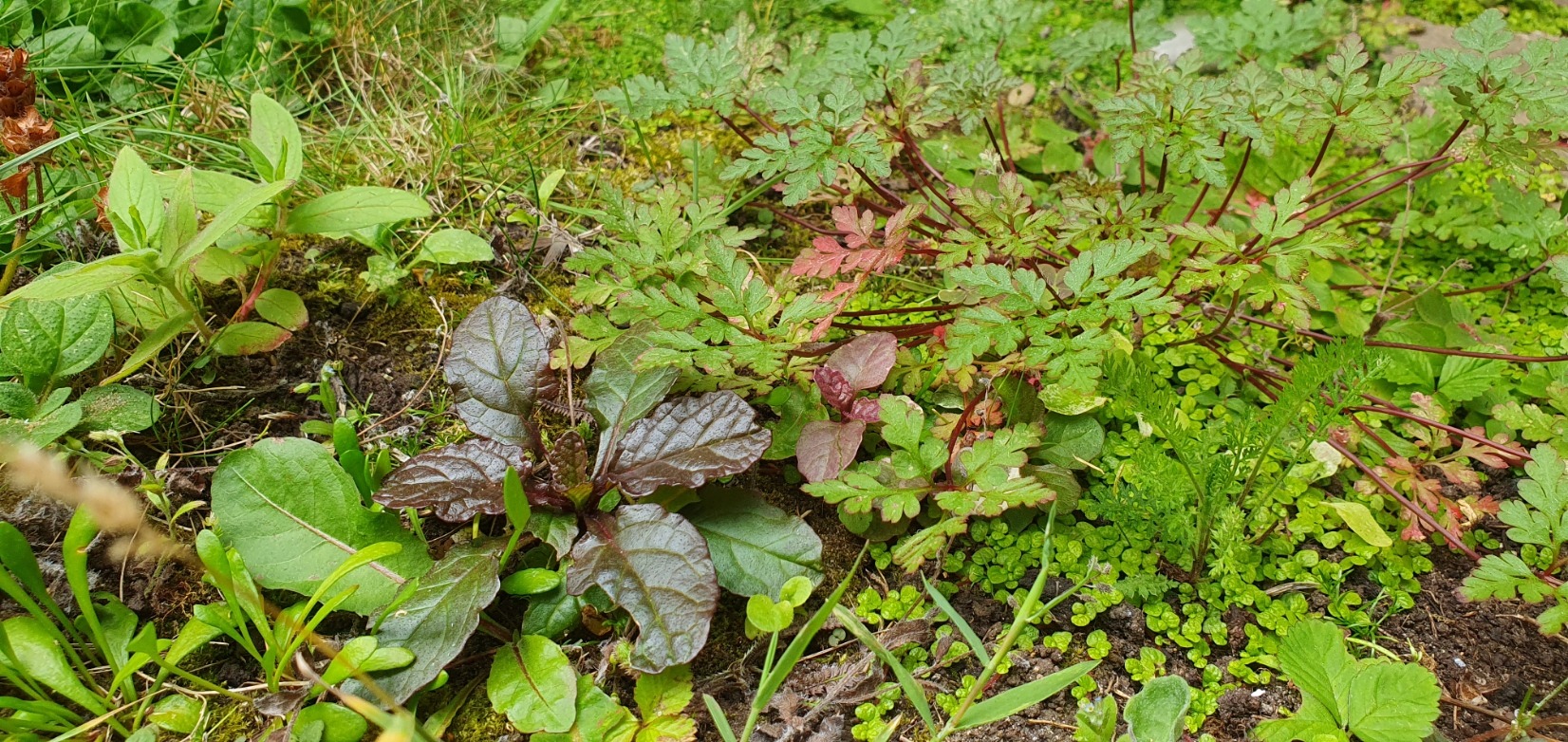
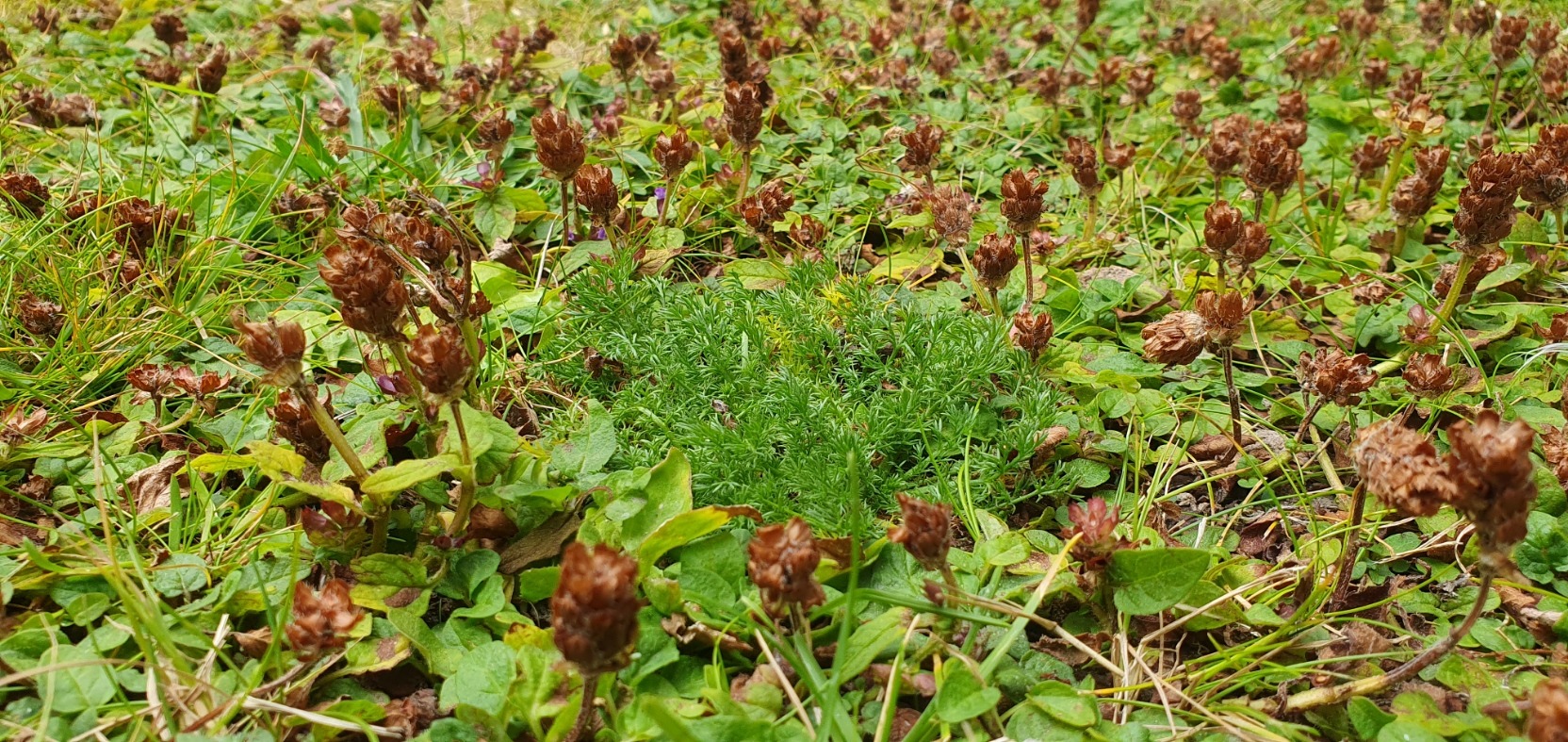
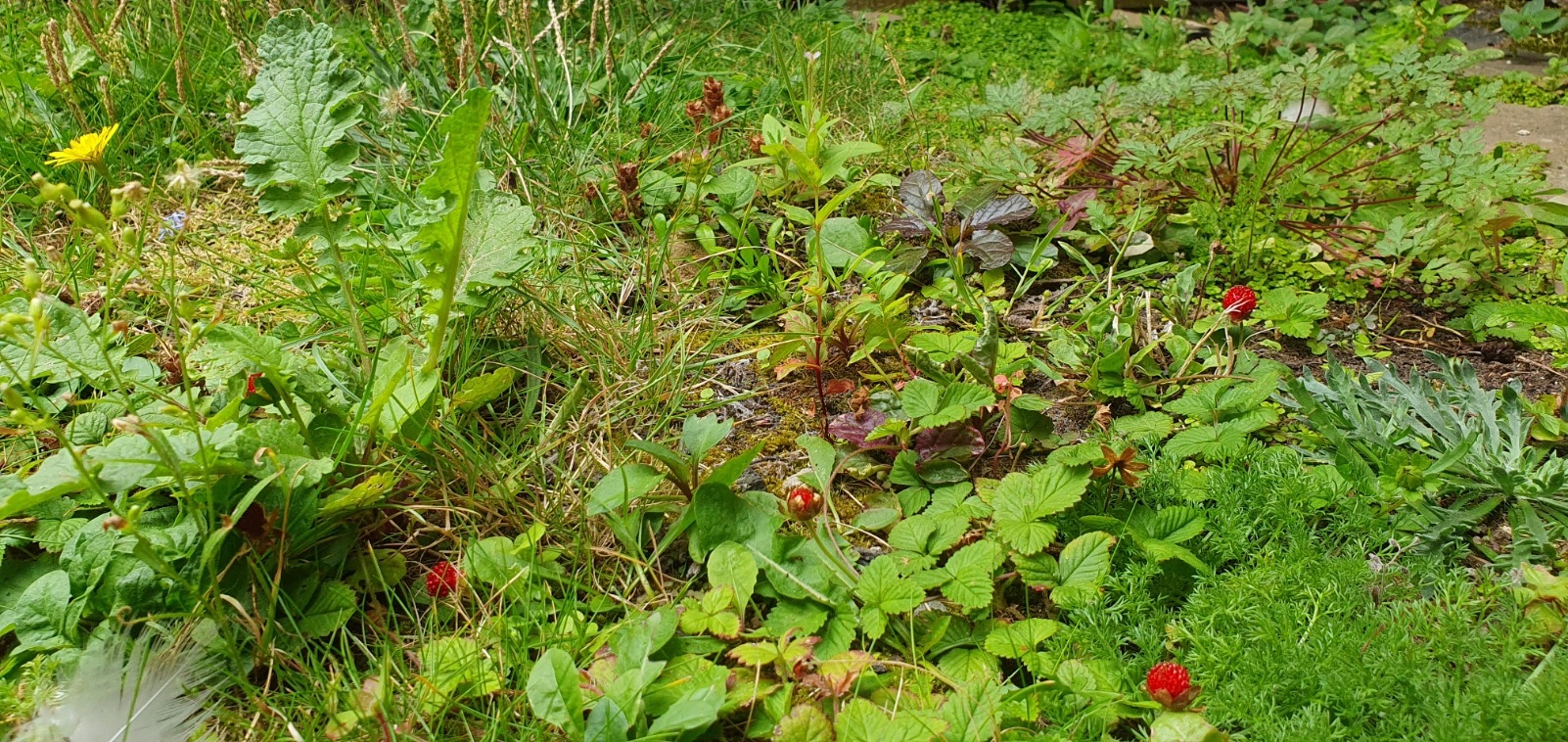
There were all sorts as you can see.
Aided by my well-thumbed copy of The Wild Flower Key by Francis Rose, and to my subsequent astonishment, I was able to confidently identify nearly 50 different forb species inhabiting that little bit of corner. I did not attempt to identify the few unhappy grass species.
Some were locally common lawn forb species, such as seaside buck’s horn plantain, some were clearly transients such as pellitory-of-the-wall taking advantage of the lack of mowing, and some were unexpected arrivals that were probably from nearby garden beds and borders (e.g. Aquilegia & Linaria), and therefore unlikely to stay or survive for any length of time. It was as if some had been waiting for the mowing to stop. Some I had obviously been instrumental in placing some there myself, and some were delightfully unexpected, such as the seaside centaury, that mowing would usually have destroyed. I quite enjoy those “How on Earth did that get there?” moments that all gardeners will be familiar with.
Perhaps I should not have been too surprised at the variety. I know ecosystems are not fixed in time, they are dynamic and ever-changing, especially if there is a gardener at play.
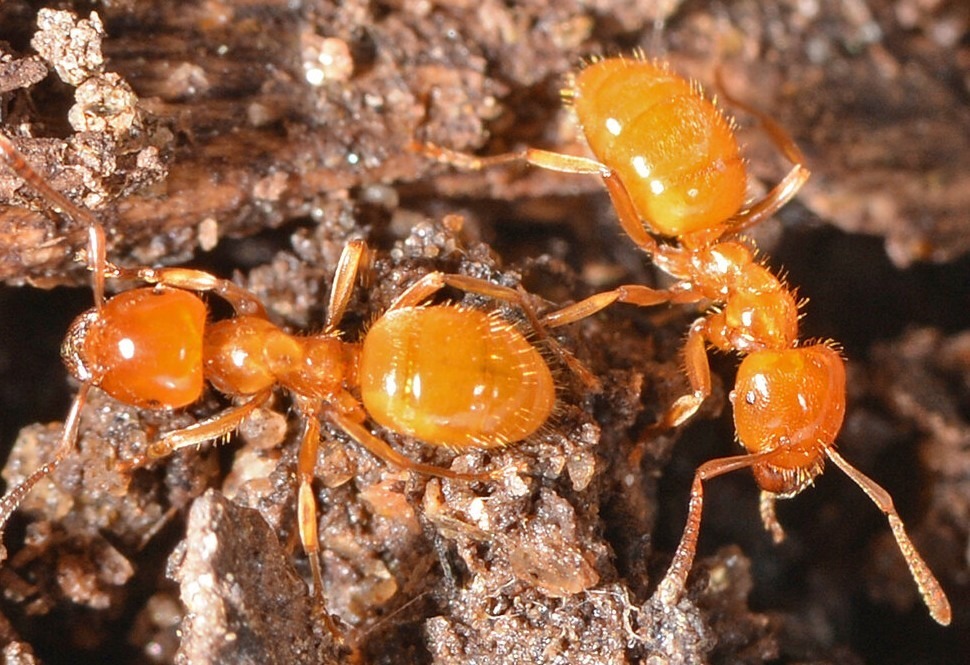
At any one time it is not unusual for new species to be arriving, current and prior species persisting by plant or seed, and some to be departing. Environmental factors, both natural and human, will be significant influences to this behaviour, but I was still rather impressed (and just a little bit chuffed) at how many plant species were in that little corner patch. It also turned out to be the only place, and the only time, that I have ever encountered what I know as orange ants, in the whole time I have lived here.
All around the local area there were growth-reduced and drought-browned grassy lawns, and in my little corner, although there was no real height to the vegetation, there was some greenery and even some flowers. That there had been no need for mowing due to the drought had allowed for some unexpected appearances.
The assemblage of plants seems to be one that is significantly anthropogenic in nature (human influenced), would inevitably be short-lived, and unsustainable as a complete collection in the medium to longer term. Interesting though. I was impressed at just how quickly the plants had responded to the change in environment and management.
I wonder what plants might show up or thrive if we had a relentlessly wet spring and summer.
The list (Excel file) of corner lawn plants observed during the 2025 drought can be found HERE.
I had noticed how in another front garden not too far away, where the owner usually follows a mixed mowing-frequency regime, that the lawn area overall was struggling with the drought. I wish I had a droughted lawn photo to show, but for some reason the image I took was corrupted.
However, no matter the mowing frequency usually used, growth was significantly retarded, and the cornfield annual type plants she sometimes adds to the usually taller growing, meadow-like sections, had equally struggled along with the low-cut grass pathways, and the additions were barely showing at all.
It had me wondering once again, what is a lawn?
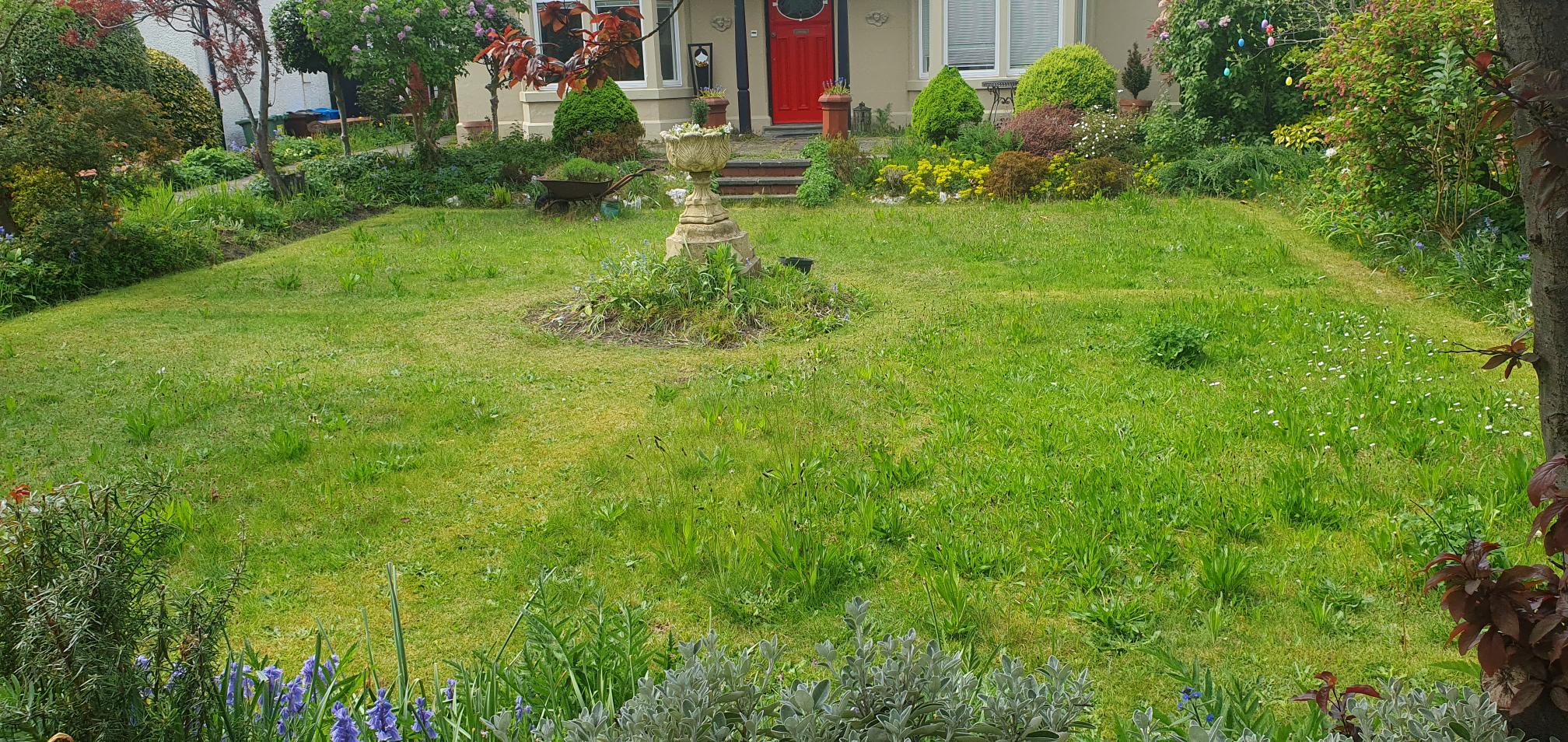
That particular garden’s lawn area has predominantly grasses, and is seemingly managed, in parts, in three different ways: 1. Cut low as required for access, 2. Cut around twice a year for a grassy meadow-type effect, 3. Cut once per year at the end of the growing season to provide a fully annual and tall grassy habitat.
Would that be a single front garden lawn? Or three lawns? Or two grassy eco-borders with a real lawn between them, a managed grass-based gardenscape or something else entirely?
My little clothes-drying corner has around 40-50% grass cover, but did get mown five times during the year (although pre, and post-drought only), but is it a lawn? Or is it a mixed bunch of transient, perennial, gardener-added, and spontaneous ever-changing forbs, that mowing makes look like a lawn? Is anything managed to look like a lawn actually a lawn?
I have addressed the “What is a lawn?” question before, but a complete or definitive answer continues to seem elusive.
That, in itself, remains intriguing. An answer yet to clearly present itself...